


Guides10 min read
How do you handle a court case or dispute in Qatar from abroad?

Faysel Al-MohannadiLawyer admitted before the Court of Cassation · Reviewed on
Short answer
If you live outside Qatar, you can usually bring or defend a civil or commercial case there through a lawyer registered in Qatar, using a power of attorney attested for use in Qatar. Court papers reach you through diplomatic channels or your national address, and some courts now hold video hearings. A felony defendant must attend trial in person.
What can you do from abroad, and when must you be in Qatar?
Most civil and commercial cases in Qatar can be handled from abroad through a representative: a lawyer, or a spouse, relative or in-law up to the fourth degree whom the court accepts (Civil and Commercial Procedure Law, Article 40; Advocacy Law, Article 6). The court can still order you to attend, and criminal cases follow different rules.
| Step | How it is done from abroad | Must you be in Qatar? |
|---|---|---|
| Appointing a lawyer | A power of attorney notarised abroad and attested for Qatar (Procedure Law, Article 41) | Not as a rule |
| Being served | Diplomatic channels, registered mail or your national address (Articles 10 and 11) | No |
| Following the case | The Supreme Judiciary Council (SJC) portal with a Tawtheeq login, or your lawyer | No |
| Civil hearings | Your lawyer attends, and some circuits hold video hearings | Only if the court orders you to attend or be questioned (Articles 49 and 306) |
| Settling, waiving or dropping the case | A representative with special authority (Article 44) | Not as a rule |
| Defence to a contravention, or a misdemeanour without immediately enforceable prison | A lawyer at first instance (Criminal Procedure Code, Article 179) | Only if the court orders it |
| Defence to a felony, or a misdemeanour with immediately enforceable prison | Someone may attend to explain your absence (Article 179) | Yes, in person |
How do you give a lawyer a power of attorney from abroad?
You appoint a lawyer from abroad with a written power of attorney; if it is not an official document, your signature on it must be certified by the competent official body (Procedure Law, Article 41). Papers in the case can then be served at your representative's address (Article 42).
Sign it before a notary or other notarising authority where you live. Qatari citizens can also use a Qatari embassy, which issues powers of attorney for citizens.
Have it authenticated by that country's foreign ministry if required, then by the Qatari mission there, then by the Ministry of Foreign Affairs (MOFA) in Qatar, or use MOFA's "Complete Attestation Outside Qatar" service.
Attach a certified Arabic translation of any document in another language (Notarisation Law No. 1 of 2023, Article 7).
Ask the body that will rely on it whether it must be deposited with the Ministry of Justice through "Acceptance and Deposit of Documents Notarized Before Foreign Authorities" (Notarisation Law, Article 16).
A litigation power of attorney covers bringing or defending the case up to judgment at that level of court (Article 43). Admitting or waiving the claim, settling, arbitration, dropping the case and waiving an appeal need special authority (Article 44). See also our guide to power of attorney risks.
Only lawyers may practise law (Advocacy Law, Article 3). A non-Qatari lawyer licensed at home can ask for permission to plead in a specific case alongside a lawyer practising in Qatar (Article 8).
How are you served abroad, and what if you don't appear?
If you have a known address abroad, papers in a civil case go to MOFA for delivery through diplomatic channels, and the Ministry's confirmation of delivery is enough (Procedure Law, Article 10(8)). The court may also serve you abroad by registered mail or any other suitable method (Article 11).
- With no known address in Qatar or abroad, papers go to the police commander, and the court may order publication in two daily newspapers in Qatar (Article 10(9)).
- Service at your national address is valid, and the address on record counts if you don't report a change (National Address Law No. 24 of 2017, Articles 4 and 5). It includes any permanent address abroad (Article 2).
- In another GCC state, non-criminal court papers go directly to the court or competent body where you live (1995 GCC Convention, Article 20).
- The distance period for anyone domiciled abroad is 60 days, unless you are served while in Qatar (Procedure Law, Article 12).
Your absence does not stop the case. If the defendant misses the first hearing after personal service, the court decides; otherwise it serves them again, and either way the judgment counts as given in their presence (Article 55). The route then is an appeal in time; see our guide on checking a court case.
Can you follow the case and join hearings from abroad?
You can follow a Qatar case online, and some courts now hear cases by video. The Judicial Authority Law allows trials and witness hearings to be held electronically under SJC rules (Law No. 8 of 2023, Article 17), set out in SJC Decision No. 9 of 2026, in force since 8 May 2026:
- A "video hearing" uses sound and picture; a "virtual hearing" works by exchanging memoranda online. Both run in the circuits the SJC President designates (Articles 1 and 2).
- Parties and their lawyers attend, witnesses, experts and interpreters may join, and access is through Tawtheeq, SJC systems or a link sent to your national address (Articles 3 and 5).
- The court can order personal attendance, and a party can ask for an in-person hearing for serious reasons the court accepts (Article 8).
- Judgments are issued online (Article 15), and the rules also cover criminal trials within the Criminal Procedure Code's safeguards (Article 16).
The decision does not say whether a party outside Qatar can join, so confirm this with the court or your lawyer. To follow the case yourself, the SJC requires that you are a party with a Tawtheeq account, and a law office can be linked to your case through "Request to Link a Law Office to a Case"; see checking a court case.
Arabic is the language of Qatar's courts, and the court may hear parties or witnesses who don't know it through a sworn interpreter (Judicial Authority Law, Article 18; Procedure Law, Article 68). Criminal investigations are also in Arabic, with an interpreter for statements and documents in other languages (Criminal Procedure Code, Article 72).
Can a criminal complaint or case be handled from abroad?
A criminal complaint can be made through a special attorney, but in serious cases the accused must attend trial in person. Anyone who knows of a crime that needs no complaint can report it to the Public Prosecution or the judicial police (Criminal Procedure Code, Article 32). A complaint-based offence, such as a bounced cheque (Penal Code, Article 357), is reported by the victim or their special attorney (Article 3); the Ministry of Justice has a "Special Power of Attorney for a Cheque Complaint".
- In a felony, or a misdemeanour whose prison sentence must be carried out at once, the accused attends in person; in other cases a lawyer can appear at first instance (Article 179).
- If the accused neither attends nor sends a lawyer where allowed, the court rules in their absence (Article 180). An opposition can be lodged through a representative, but missing an opposition hearing without an acceptable excuse cancels it (Articles 266 and 267).
- In a felony, the opposition period runs from arrest unless the judgment was served on you personally; for someone who has fled abroad, from service at the last known address (Article 264).
If you plan to return to Qatar while a case is open, check its status first. The Attorney General or the court can ban an accused or convicted person from travel (Article 133) and, in a felony or misdemeanour, put their name on the arrival watch lists for three years, renewable (Article 134). The prosecution can order the arrest of an accused who ignores a summons without excuse or has no known residence in Qatar (Article 105); the order cannot be carried out after six months unless renewed (Article 106). The Public Prosecution's "Report Inquiry" shows a report's main details without login; see also our guides on travel bans, police summonses and bounced cheques.
Can you collect a judgment from someone who left Qatar, or use a Qatari judgment abroad?
A judgment can still be enforced in Qatar after the debtor leaves, against their assets there. The request is filed and followed electronically (Judicial Enforcement Law, Article 108), service at the national address counts as personal service, and the court may serve someone abroad by any suitable method (Article 107).
- After notice, the judge can attach and sell the debtor's assets and take other measures step by step (Article 36).
- Before notice, the judge can order an inquiry into the debtor's assets and a precautionary attachment (Article 36).
- Measures end automatically once the amount is paid or the required act is done (Article 37).
Assets in another country usually mean enforcing the Qatari judgment there, under that country's law. Within the GCC, the 1995 Convention covers final civil, commercial, administrative and personal status judgments (Article 1; Decree No. 16 of 1996). Elsewhere it depends on that country's law and any treaty with Qatar. MOFA attests documents issued in Qatar on an online request through Tawtheeq. See our guides on enforcing foreign judgments and enforcing a judgment in Qatar.
When should you speak to a lawyer?
Speak to a lawyer early if a deadline is running, you have received papers from Qatar, or you need a power of attorney the court will accept. Signs it is worth asking:
- You received court papers through an embassy, by post or by text message, and don't know the deadline.
- A judgment was given in your absence, and an appeal or opposition period may be running.
- You plan to return and don't know whether a travel ban, arrest order or watch-list entry is recorded against you.
- Your debtor has left Qatar and you want to know what can be done with their assets there or abroad.
What the law says
This guide relies on the Civil and Commercial Procedure Law (Law No. 13 of 1990), Articles 10 to 12, 40 to 44, 49, 55, 68 and 306; the Judicial Authority Law (Law No. 8 of 2023), Articles 17 and 18; Supreme Judiciary Council Decision No. 9 of 2026 on electronic judicial procedures; and the Criminal Procedure Code (Law No. 23 of 2004), Articles 3, 32, 72, 105, 106, 133, 134, 179, 180, 264, 266 and 267. It also relies on the Judicial Enforcement Law (Law No. 4 of 2024), Articles 36, 37, 107 and 108; Advocacy Law No. 23 of 2006 as amended up to Law No. 19 of 2025 (Articles 3, 6 and 8); the Notarisation Law (Law No. 1 of 2023), Articles 7 and 16; National Address Law No. 24 of 2017 (Articles 2, 4 and 5); and the 1995 GCC Convention (Articles 1 and 20). Texts were checked on Al Meezan, and service pages on the SJC, Ministry of Justice and MOFA websites, on 21 October 2026.
Read on Al MeezanQuestions people ask
Not necessarily. Arabic is the court language, but the court may hear parties or witnesses who don't know it through a sworn interpreter (Judicial Authority Law, Article 18). An interpreter may also join a video hearing (SJC Decision No. 9 of 2026, Article 3).
Video hearings are held in the circuits the SJC President designates, with access through Tawtheeq, SJC systems or a link sent to your national address. The decision does not say whether a party outside Qatar can join, and the court can order personal attendance.
If you have a known address abroad, the papers go through MOFA by diplomatic channels (Procedure Law, Article 10(8)). Service at your national address is also valid, and the address on record counts if you haven't updated it (National Address Law, Articles 4 and 5).
A spouse, relative or in-law up to the fourth degree may represent you, except before the Court of Cassation (Advocacy Law, Article 6). An appeal or cassation petition must come with a power of attorney for a lawyer admitted before that court.
This guide is general information about Qatari law, not advice on your case.
Guides on this
All guides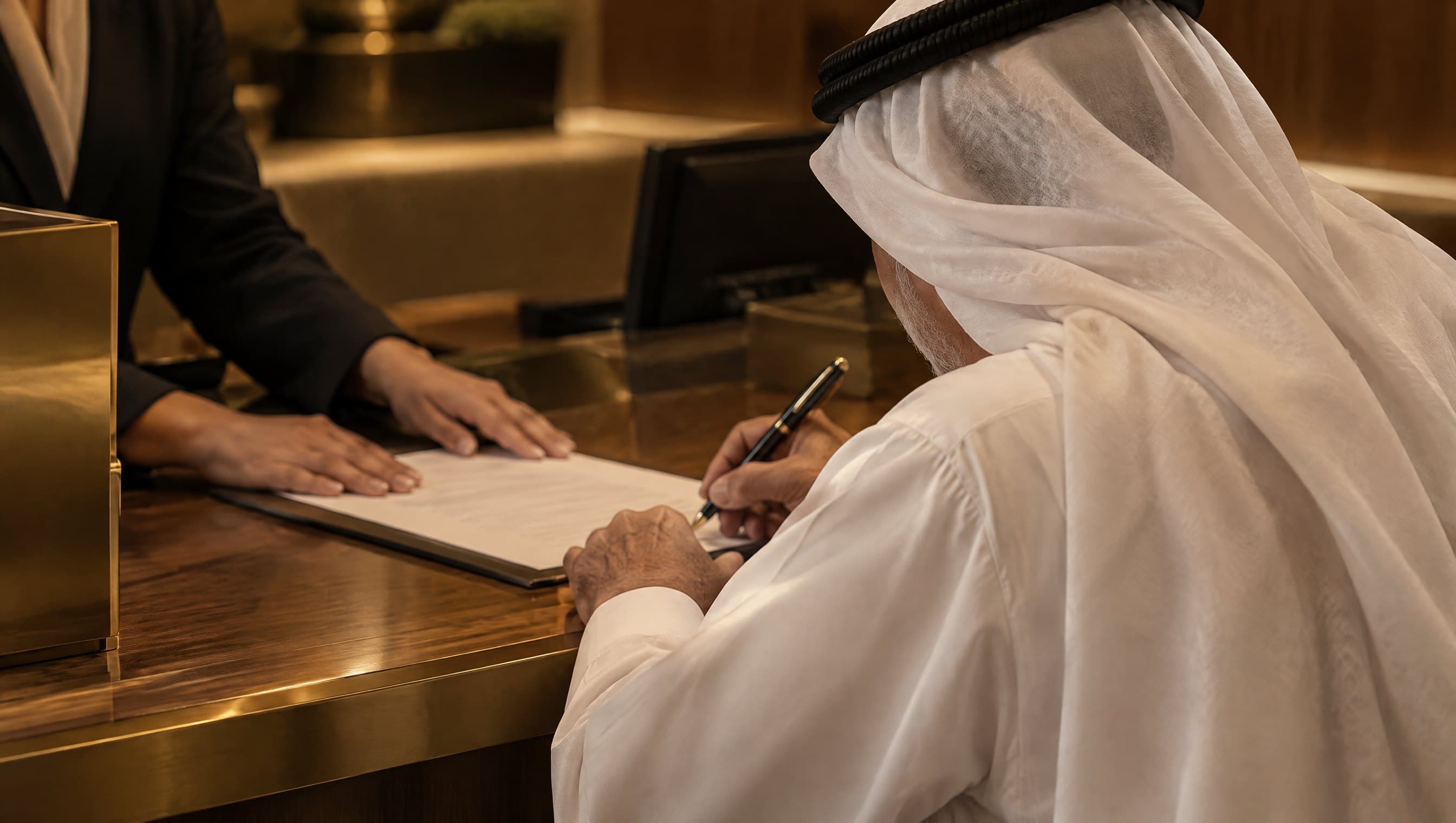 GuidesGeneral power of attorney in Qatar: the risks and how to limit themA general power of attorney in Qatar can give an agent wide powers. Vague wording covers only administration, but the agent can sell or mortgage once the POA names those acts, even without naming the property. Read the powers first, prefer a special POA with an end date, and know you can usually revoke it at the Ministry of Justice.
9 min read
 GuidesHow do you check a court case online in Qatar?Log in to the Supreme Judiciary Council (SJC) e-services portal with your Tawtheeq (National Authentication System) account, choose "Search by Case Number" and enter the case number, type, court and year. You can also use the SJC's Al Mahakem app or its WhatsApp "Virtual Employee" on 44597777. Travel bans are checked separately, with the Ministry of Interior.
9 min read
 GuidesHow do I check for, and lift, a travel ban in Qatar?You can check through the Ministry of Interior's e-services portal, whose "Travel Ban Inquiry" lists any ban circulars on your ID and the authority behind each. A ban is lifted by the authority that ordered it (the Public Prosecution, a criminal court or the enforcement judge), usually after payment, settlement, adequate security or a successful grievance.
9 min read
 GuidesEnforcing a foreign court judgment in QatarThe Enforcement Court can order a foreign judgment enforced in Qatar under Article 13 of Judicial Enforcement Law No. 4 of 2024. It requires reciprocity, a final judgment from a competent court, proper notice, and no conflict with a Qatari judgment or public order. The GCC Convention takes priority, and arbitral awards follow the Arbitration Law and New York Convention.
8 min read
 GuidesArabic and English contracts in Qatar: which version prevails, which law applies and which court decides?Arabic is the language of Qatar's courts, and the Investment and Trade Court requires Arabic translations of foreign-language documents. Company founding contracts and employment contracts must be in Arabic, with Arabic prevailing; otherwise, the contract should name the prevailing version. Parties may choose the governing law within public order (Civil Code Article 27) and agree in writing to arbitrate.
9 min read
 GuidesCan a foreign investor own 100 per cent of a business in Qatar?Yes, in most sectors. Law No. 1 of 2019 lets a non-Qatari investor own up to 100 per cent of a Qatari company, with Ministry of Commerce and Industry approval to exceed 49 per cent and an activity on the Minister's approved list. Banks and insurers, unless the Cabinet exempts them, and commercial agencies stay closed.
9 min read
Dealing with a case in Qatar from abroad?
Understand the steps, documents and deadlines that apply to you, and ask about your situation.